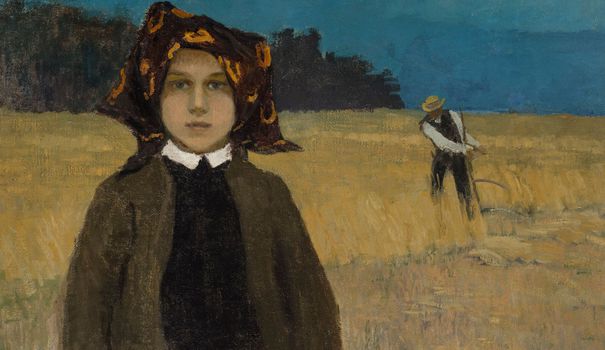
In order to celebrate the centenary of the independence of Estonia, Latvia and Lithuania, the exhibition “Wild Souls, Symbolism in the Baltic States” opens on 12th October at the KUMU Museum in Tallinn after the great success with the public at the Musée d’Orsay in Paris. The exhibition explores Baltic symbolism from the 1890s to the 1920s and 1930s and each of the three countries is represented by over fifty works.
It is an exhibition rich in painting surprises since it comes from countries that the international public knows very little about; it allows the public to familiarise themselves with the strange and often fascinating worlds of painters such as Čiurlionis, Mägi, Purvitis or Krastinš, amongst others. By using elements of popular culture, folklore and local legends, as well as the uniqueness of their landscapes, they bring out an art of a genuine originality.
European symbolism, and the emancipation of the consciousness it conveys, are inseparable from independence in the Baltic countries. It was only after the First World War that Estonia, Latvia and Lithuania finally gained their independence, allowing the emergence of highly talented painters.
The exhibition is divided into three parts: Myths and Legends, Soul and Nature. The exhibition retraces the interplay of influences and resistance through which artists have forged a language specific to their universe. This exhibition is under the responsibility of Rodolphe Rapetti, curator of this remarkable journey to the heart of the Baltic States, which opens up new horizons for visitors to explore pictorial worlds from northern Europe that must be discovered at all costs.
From 12th October 2018 to 3rd February 2019 at the KUMU Museum in Tallinn.
Head Commissioner: Rodolphe Rapetti
Assistant Commissioner: Béatrice Avanzi
Coordinator: Ginta Gerharde-Upeniece, National Gallery of Latvia
Responsible for the exhibition at the KUMU Museum:
Inga Jaagus inga.jaagus@ekm.ee
Liis Pählapuu liis.pahlapuu@ekm.ee
On the occasion of the launch of this exhibition, the French Institutes of Lithuania, Latvia and Estonia produced a webdoc showing the backstage of the exhibition, and proposing a journey through the Baltic lands to discover the traces of this artistic movement of the 19th century, crucial in the history of the three Republics.
This webdoc, which goes from Paris to the three Baltic countries including Estonia (Tallinn, Tartu), was produced and produced for the French Institute of Lithuania, the French Institute of Latvia and the French Institute of Estonia with the collaboration of the Musée d’Orsay and the Fine Arts museums of the three countries.
Find the webdoc “Rencontres (Im)prévues” in French below :
Writing and directing: Loïc Salfati
Production: French Institute of Lithuania
Associated producers: French Institute of Latvia, French Institute of Estonia
Music: Pierre Thilloy
Translations: René Weber and Marje Kidron (Estonian), Veronika Vasiljeva, Giedre Bernotaite-Salfati